Crystals for Neurodivergent People: ADHD, Autism & Sensory Sensitivities
If you've ever found yourself stroking a smooth stone to calm down, fixating on the sparkle of a piece of amethyst, or feeling inexplicably soothed by holding something cool and weighty in your palm you're in good company.
Many neurodivergent people find crystals genuinely useful not necessarily as magical cures, but as sensory tools, focus anchors, grounding objects, and beautiful things to stim with. And that alone makes them worth talking about.
Here's what crystals can do and this matters ,they can offer something that a lot of neurodivergent people are quietly, desperately searching for: a grounding point, A tactile anchor, A small, beautiful thing you control, in a world that often feels like it's happening too fast and too loud.
This guide is written for the ADHD brains that lose their keys four times before 9am. For the autistic people who feel every texture like a volume dial turned to eleven. For anyone whose nervous system arrived into this world tuned to a slightly different frequency than the people around them and who's a little tired of being told to just calm down.
"I don't care if they have 'real' metaphysical powers. Holding a piece of cool labradorite stops my anxiety spiral. That's real enough for me."
— Crystal user with ADHD & anxiety
What does "neurodivergent" actually mean?

The word gets used a lot — but its meaning is often blurred, misunderstood, or reduced to a trending label. Here's the clear, honest version, written without jargon and with full respect for your experience.
The word "neurodivergent" was coined by sociologist Judy Singer in the late 1990s. It came from the neurodiversity movement, the idea that neurological variation is a natural part of human diversity, not a problem to be fixed. Using the word is a way of describing how your brain works without pathologising it. It doesn't mean you don't face real difficulties. It means those difficulties don't define your worth
Neurological
Relating to the brain and nervous system — how they're structured, how they process information, and how they experience the world.
Different from typical
Diverging from what is statistically common or socially expected — not lesser, not broken. Simply wired in a way that differs from the majority.
"Neurodivergent means your brain developed and works differently from what society considers standard. It's a neutral, descriptive term — not a diagnosis, not an insult, not a superpower narrative. Just a fact about how your mind is built."
— The plain-language version
Why Some Neurodivergent People Are Drawn to Crystals
There's a reason crystal collections and neurodivergent people seem to find each other so often. It's not a coincidence — it's neuroscience meeting sensory joy.
-
Tactile stimming
Many autistic and ADHD people stim by touching, rubbing, or squeezing things. Smooth tumbled stones, pointy raw crystals, and cool glass-like gems offer a huge range of satisfying tactile input.
-
Visual hyperfocus
The sparkle, depth, and colour variation of crystals can be deeply absorbing in a calming way — providing gentle, pleasant visual stimulation without overwhelm.
-
Grounding anchors
Holding something physical helps many people stay present during dissociation, anxiety, or sensory overload. A crystal in your pocket is an always-available grounding tool.
-
Collecting & categorising
The urge to collect, sort by colour, learn facts, and build a system around crystals maps beautifully onto the pattern-seeking, knowledge-hungry nature of many neurodivergent minds.
Best Crystals for ADHD: Focus, Calm & Impulsivity

ADHD brains are not broken. They're high-powered engines running on rocket fuel in a world built for sedans. The challenge isn't a lack of intelligence — it's regulating attention, impulse, and emotional intensity in a neurotypical world that wasn't designed with you in mind.
The crystals that tend to work best for ADHD have two things in common: they either help slow the signal (calming the hyperactive noise) or they sharpen it (bringing foggy focus into clarity). Here are the ones worth reaching for:
-
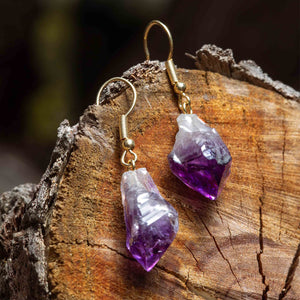
Amethyst — Calm for Clear Thinking
Calming, Sleep support, Emotional balance
Often called the "stone of calm," amethyst is the go-to for an overactive, racing mind. Its cool purple tones are visually soothing, and many people find holding it during stressful moments genuinely helps them slow down.
Try it: Keep a tumbled amethyst on your desk or hold it during Zoom calls you're struggling to focus on.
-
Aquamarine — Courage for Honest Expression
Focus, Communication, Clarity
Cool, clear aquamarine is associated with mental clarity and clear communication — two things ADHD brains can really struggle with. Its smooth surface makes it excellent for tactile stimming without distraction.
Try it: Slip a small piece into your pocket during meetings or conversations that require extra focus.
-
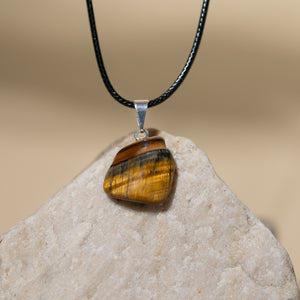
Tiger Eye — Willpower for Follow-Through
Motivation, Grounding, Confidence
Rich, warm bands of gold and brown make the tiger's eye deeply satisfying to look at — ideal for visual stimming. It's associated with motivation and staying grounded when ADHD energy is scattered.
Hold tiger eye for a few minutes before beginning a task you've been avoiding. Set it next to whatever you're working on as a visual cue.
Try it: Hold it at the start of a task to set an intention. The visual "chatoyance" (shimmer) is wonderfully absorbing without being overwhelming.
-
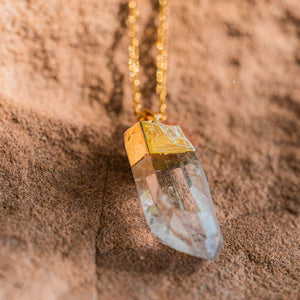
Clear Quartz — The Amplifier
Clarity, Amplifying, Focus
The most visually fascinating crystal for many — light refracts through it in gorgeous ways. Clear quartz is associated with amplifying intentions, making it a great companion for focus-setting rituals before tasks.
Program your clear quartz before a work session by holding it and stating your intention clearly: "I will finish this report before 3pm." Keep it visible while you work.
Try it: Place a clear quartz point on your desk pointing toward you as a visual reminder of your current task.
-
Lapis Lazuli — Wisdom for Inner Truth
Deep focus, Memory, Calm confidence
Deep blue with golden flecks of pyrite — lapis is like holding a piece of the night sky. Traditionally linked to intellect and memory, it's a popular study companion for ADHD brains.
Try it: Hold lapis while reviewing notes or during reading sessions where your mind keeps wandering.
Best Crystals for Autism & Sensory Differences

Autism is not a deficit of feeling, it's often an abundance of it. The autistic nervous system receives and processes sensory, emotional, and social information with a depth and intensity that can be overwhelming in a world calibrated for less sensitivity.
The crystals that tend to resonate most with autistic people fall into three broad themes: those that protect and calm an overloaded sensory system, those that support communication and social navigation, and those that deepen the sense of authentic self in a world that often asks autistic people to mask who they are.
-
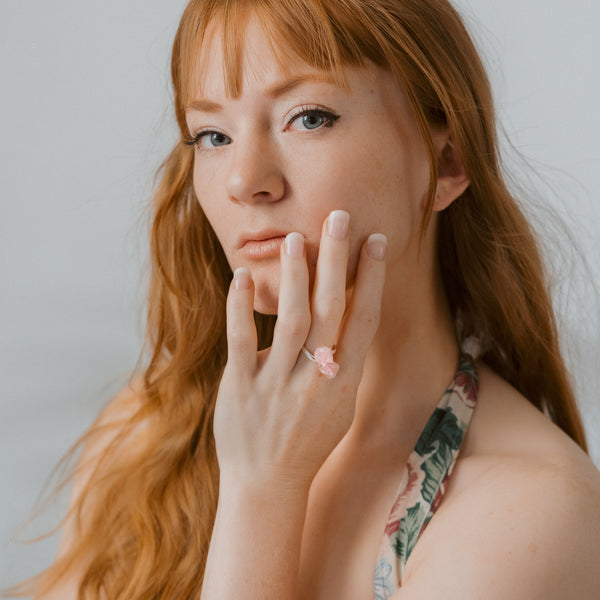
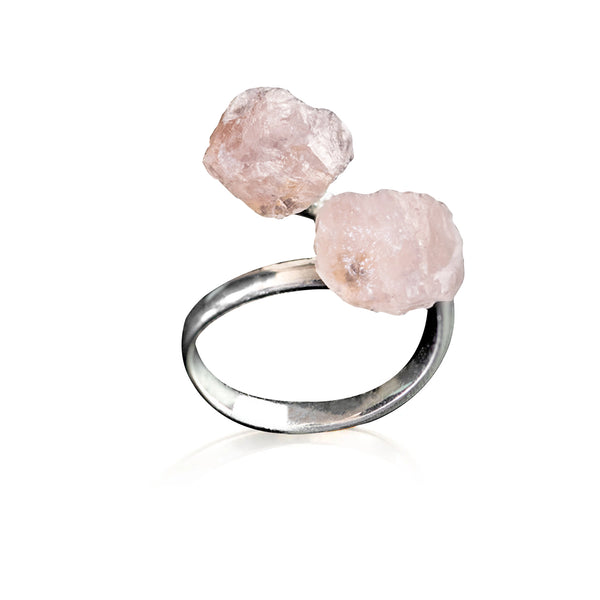
Rose Quartz — Compassion for Self-Love
Gentle, warm, and unconditionally soft in energy rose quartz is often a first love for many people on the autism spectrum. It's associated with self-acceptance and compassion, and its tactile smoothness is deeply soothing.
Try it: A palm stone (larger, flat, smooth piece) fits perfectly in the hand during rest or when emotions feel big and unnamed.
-
Moonstone — Intuition for Emotional Balance
Moonstone's adularescence (that inner glow that moves as you turn it) is one of the most visually captivating phenomena in the mineral world, perfect for autistic individuals who have a special interest in optics or geology. It's linked to emotional flow and navigating change.
Try it: Carry it during days with unexpected schedule changes or transitions — the ritual of holding it can signal to your nervous system that change is okay.
-
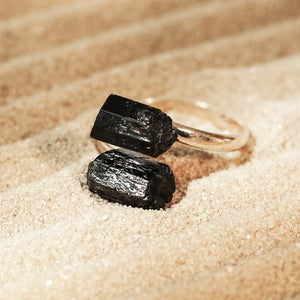
Black Tourmaline— Protection for Grounded Energy
If the world feels like too much, black tourmaline is often described as a "shield" used to create a sense of energetic and emotional boundary between you and overwhelming environments. Its striated (ridged) texture provides excellent tactile stim.
Try it: Keep a piece in your bag when visiting crowded or loud places like shops, transport, or events.
-
Labradorite— Magic for Inner Transformation
Labradorite's flash sudden explosions of electric blue, green, and gold when light hits it at certain angles is genuinely magical-looking and can trigger deep joy and wonder. Many autistic people find it grounds anxiety through visual fascination.
Try it: Turn it slowly in bright light when you need a sensory reset. Hard to feel anxious when you're watching lightning inside a rock.
-
Fluorite— Focus for Mental Clarity
Fluorite comes in stunning bands of purple, green, and a clear visual feast. It's associated with mental organisation and learning, making it a favourite for autistic people who love pattern recognition and structure. Optically, it's endlessly interesting.
Try it: Keep an octahedron-shaped fluorite (naturally forms this way!) on your study space — the geometry alone is deeply satisfying.
Crystals for Sensory Sensitivities: Turning Down the Volume
Sensory processing differences don't only occur in autism and ADHD, they can be part of anxiety disorders, SPD (Sensory Processing Disorder), trauma responses, and simply individual variation in how nervous systems are wired. If the world routinely feels too bright, too loud, too scratchy, too much these are the crystals for you.
The most important thing when choosing crystals for sensory sensitivities is to pay attention to how the crystal feels physically, not just what you've read about it. Some people with sensory issues find certain textures or energies of crystals activating rather than calming. Trust your body's response above any guide, including this one.
-
Howlite : For anxiety-driven sensory reactivity, racing thoughts, and physical tension. Cool, smooth howlite tumbles are among the most tactilely gentle crystals and don't overstimulate.

-
Blue Lace Agate : For sound sensitivity and emotional sensitivity. Its energy is exceptionally soft and is rarely reported as overwhelming.

-
Smoky Quartz : For overall system overwhelm. Grounding and transmuting, it helps move excess sensory energy downward and out rather than letting it build.

-
Rose Quartz : For tactile sensitivity and self-compassion after a hard sensory day. Gentle, warm, and unconditionally comforting.

-
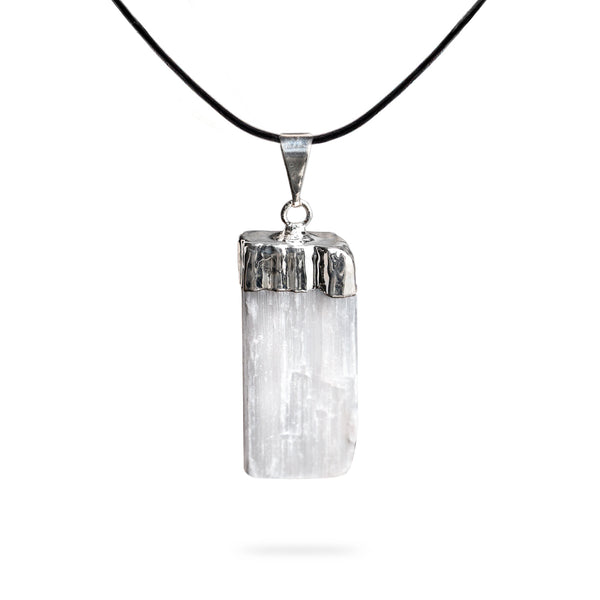
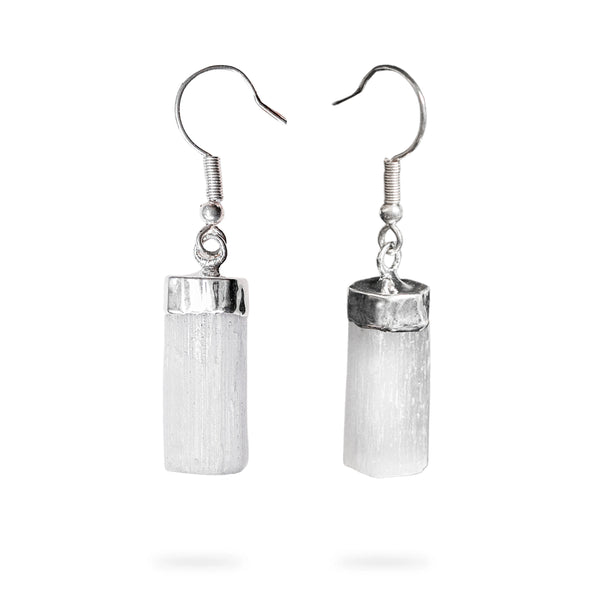
Selenite : For mental noise and electromagnetic sensitivity. Use selenite wands to gently sweep around the body after overwhelming experiences many find the ritual itself as calming as the stone.

Quick Reference Guide — Your Neurodivergent Crystal Toolkit
|
Challenge |
Crystals |
How to use |
|
Difficulty focusing ADHD, task initiation |
Clear quartz, Lapis lazuli, Fluorite, Citrine |
Place it on the desk before starting work. Hold and set a one-sentence intention for the session. |
|
Impulsivity & restlessness Acting before thinking |
Green aventurine, Howlite, Blue lace agate |
Keep in the pocket. Touch before sending a message or making a quick decision as a pause ritual. |
|
Hyperfocus tunnel / burnout Can't switch off a task |
Lepidolite, Amethyst, Moonstone |
Set the crystal as a visual timer when you notice it, check in. Place at the edge of your workspace. |
|
Meltdown / shutdown Overwhelm, emotional flooding |
Rose quartz, Lepidolite, Selenite |
Keep in an emergency kit. Hold tightly or stroke slowly. Cool smooth stones are best here. |
|
Anxiety & racing thoughts Worry loops, intrusive thoughts |
Amethyst, Labradorite, Lepidolite, Black tourmaline |
Hold in both hands and breathe slowly. The physical weight and temperature interrupts thought spirals. |
|
Rejection sensitivity (RSD) Intense emotional pain from perceived rejection |
Rose quartz, Rhodonite |
Use a palm stone. Hold to the chest and repeat a self-compassion phrase the ritual anchors self-worth. |
|
Sensory overload Too much noise, light, or input |
Black tourmaline, Smoky quartz, Hematite |
Hold in crowded or loud spaces. The weight and dark colour help create a felt sense of boundary. |
|
Dissociation / spacing out Feeling unreal or disconnected |
Hematite, Tiger's eye, Jasper |
Press firmly into the palm or squeeze. The physical sensation pulls attention back into your body. |
|
Social fatigue / masking drain Exhaustion after socialising |
Selenite, Aquamarine, Amethyst |
Use in decompression rituals after social events. Lie down and place on the chest or hold in both hands. |
|
Social anxiety / communication Selective mutism, fear of judgement |
Blue lace agate, Aquamarine, Sodalite |
Carry in pocket during social events. Touching it discretely can act as a grounding anchor mid-conversation. |
|
Sleep difficulties Racing mind, difficulty winding down |
Amethyst, Selenite, Howlite, Lepidolite |
Place it near or under the pillow. The bedtime placement becomes a sleep-onset cue over time. |
|
Nighttime anxiety / bad dreams Fear, hypervigilance at night |
Black tourmaline, Smoky quartz, Moonstone |
Place at four corners of the bed or on the bedside table. A protective boundary ritual can ease hypervigilance. |
|
Transitions & routine changes Difficulty switching tasks or activities |
Moonstone, Labradorite |
Create a start/end ritual hold crystal at the beginning and end of each activity to mark the shift. |
|
New environments / unfamiliar places High anxiety in new settings |
Black tourmaline, Tiger's eye, Rose quartz |
Carry a familiar crystal as a sensory constant — something unchanged when everything else feels new. |
Choosing crystals by texture, not just type
For sensory-sensitive people, HOW a crystal feels matters as much as what it does. Polished and tumbled: smooth, predictable, low-stimulation. Raw and natural: textured, irregular, high-stimulation. Spheres and eggs: satisfying to roll and hold, proprioceptively grounding. Points and towers: visually engaging, less ideal for carrying or holding. When in doubt, go tumble first.
Crystals are tools, not treatments. They will not cure ADHD, autism, anxiety, or any condition. If you find them helpful for sensory regulation, grounding, or comfort that is completely real and valid. Please continue using evidence-based support (therapy, medication, accommodations) alongside any wellness tools you choose. There is no shame in using all the things that help.
Crystals can help with...
Sensory regulation, tactile stimming, grounding during overwhelm, sleep rituals, emotional anchoring, focus intentions, and building comforting routines.
Crystals cannot replace...
Diagnosis, medication, therapy, occupational support, psychiatric care, or any treatment recommended by a qualified healthcare professional.
Using both is encouraged
There is absolutely no conflict between using crystals and receiving professional support. Many people use both — and that's a sign of self-awareness, not contradiction.
Practical Ways to Use Crystals as a Neurodivergent Person
Theory is great. Real life is messier. Here's how to actually integrate crystals in ways that work for a neurodivergent brain and schedule:
The Morning Anchor Practice (2 minutes)
Keep 3–5 crystals in a small bowl by your bed or bathroom mirror. Each morning, pick up each one briefly and notice how it feels. Choose the one that feels most "right" for that day. Put it in your pocket or wear it. That's it. No journaling required. No 45-minute ritual. Just a brief, tactile moment of intention.
The Desk Crystal System
Designate specific crystals for specific work states:
-
Fluorite or clear quartz = deep focus mode
-
Amethyst or lepidolite = I'm overwhelmed and need to slow down
-
Tiger eye or carnelian = I need to start something I've been avoiding
Having physical objects that represent mental states gives your brain a concrete cue — especially useful when ADHD or autistic inertia makes transitions hard.
Body Placement Without Jewelry
Not everyone can tolerate jewelry (texture sensitivity, sensory issues with contact). Alternatives that work:
-
Slip a small tumbled stone in your sock or shoe for grounding without touch
-
Tuck one inside a bra or shirt pocket
-
Keep one in your hand during video calls or phone conversations
-
Place one on your lap or thigh under a desk — the weight is proprioceptively helpful
Your brain is not broken, It never was.
A crystal, something cool, grounding, and real to hold when the world feels like too much. That is enough of a reason. No crystal replaces therapy, medication, diagnosis, or the accommodations your brain genuinely needs and deserves. A ritual, an intention, a physical object that says: I am here. I am in my body. This moment is manageable. Reaching for something beautiful and soothing is an act of self-kindness. You are allowed to do that. You always were.
You are not a problem to be solved
Every tool in this guide, every crystal, every ritual, every tip was written as an offering, not a prescription. You decide what helps. You define what "better" means for your brain.
Your differences are not defects waiting to be corrected
The way you experience the world intensely, sensorially, deeply, differently is a genuine way of being human. The world's failure to accommodate it says more about the world's imagination than about your worth.
Seeking comfort is an act of intelligence
Whether you reached for a smooth stone, a weighted blanket, a quiet corner, or a crystal that catches the light you were listening to your nervous system. That is self-awareness, not weakness.
You have always been doing your best
In a world designed around a different neurotype, simply showing up masking, adapting, compensating, persisting has required an enormous, largely invisible effort. That effort is real. It counts.
Different kinds of minds built the world's most interesting things
Pattern-obsession, hyperfocus, sensory depth, lateral thinking, relentless curiosity — these are not bugs. Across history, neurodivergent minds have driven discovery, art, science, and change. Yours is part of that lineage.
Disclaimer
Crystals are wellness tools. They can genuinely support sensory regulation, grounding, and emotional comfort — and many neurodivergent people find real value in them. Using crystals alongside that support is encouraged.
Frequently Asked Questions
Is it okay to be sceptical but still use crystals?
Absolutely, yes. Many people who use crystals don't believe in their metaphysical properties at all — they simply find them helpful as sensory tools, focus anchors, or comforting objects. The benefit doesn't require belief. If it works for you, it works.
Can crystals replace ADHD medication or therapy?
No. Crystals are wellness tools, not medical treatments. They can complement your existing support (medication, therapy, coaching, routines) but should never replace anything that's clinically helping you. Please talk to your doctor or therapist before making changes to your care.
How do I know which crystal is right for me?
Trust your senses first. When choosing in person, notice which crystals you're drawn to visually or want to keep touching. When ordering online, go by descriptions of texture and energy. Many people find their first instinct is their best guide.
What if I lose or break a crystal?
It's just a rock — and that's okay! Some spiritual traditions say crystals "leave when their work is done," but practically speaking, breakage is normal and losing things is very ADHD. Buy backups of the ones that really help you.
Are there any crystals that are harmful for neurodivergent people?
Energetically, no evidence suggests any crystal is harmful. However, some crystals contain toxic minerals (malachite, realgar, cinnabar) and should not be ingested or used in water. If you're buying crystals for a child, ensure pieces are large enough not to be a choking hazard and that raw edges are smoothed.
My child is autistic and loves collecting crystals — should I encourage this?
Yes — if it's bringing them joy, sensory regulation, and a rich area of interest, that's wonderful. Many autistic children develop deep knowledge of mineralogy through crystal collections. Support the interest, buy age-appropriate pieces, and let them lead.