The Crystal Compatibility Test: Which Stones Clash — and Why It Matters
You have probably seen those dreamy crystal flat lays online. Rose Quartz beside Amethyst. Citrine glowing next to Clear Quartz. Everything looks serene, intentional, and emotionally stable in a way that feels a little suspicious. Whoever arranged those crystals is either deeply aligned or has simply never opened five tabs of personal chaos before breakfast.
And then there is real life.
You bring home a few beautiful stones, place them together, and suddenly your space feels... off. Not haunted. Not cursed. Just weird. A little loud. A little energetically crowded. Like inviting five very different friends to dinner and realizing halfway through the meal that two of them used to date, one is in the middle of a spiritual awakening, one only communicates in blunt truths, and somehow you are now hosting an accidental intervention.
That is where crystal compatibility comes in.
Crystal energetics, the idea that different stones carry different vibrational qualities, is not just spiritual poetry dressed up in moonlight and good lighting. It is actually a useful way to think about how crystals affect the mood of a space and your own experience with them. Some stones bring out the best in each other. Others feel like they are working completely different shifts.
The result? You may feel confused, overstimulated, emotionally scrambled, or strangely like your nervous system has been handed a triple espresso and a journal prompt at the same time.
This guide is your crystal compatibility decoder. We are going to look at the most common crystal clashes, why they can feel off together, and, because life is rarely as dramatic as the internet likes to make it, the more nuanced truth too: some so-called clashing stones can actually work beautifully side by side when used with intention.
Think of it less like a crystal breakup and more like good event planning. Not every stone needs to sit next to every other stone at the wedding.
What does “crystal compatibility” actually mean?

Crystal compatibility is the idea that different stones carry different energetic qualities, and those qualities can either support each other or compete for attention.
Think of crystals less like decorations and more like energetic tools with distinct personalities.
Some are soft and soothing. Some are fiery and motivating. Some are grounding and practical. Some are all intuition, dreams, upper chakras, and mystery. None of that is inherently good or bad. The issue starts when you combine stones with very different functions without understanding what each one is bringing to the table.
That is when your crystal setup can start feeling like energetic multitasking. And as most of us know, multitasking is usually just stress wearing a productivity costume.
Why Do Crystals Clash in the First Place?

Let’s say you want calm sleep energy, but your bedside table is holding a stimulating mix of Carnelian, Tiger’s Eye, Clear Quartz, and Black Tourmaline. That setup may be powerful, but it may not be restful. Instead of helping you soften and unwind, it could keep your energy alert, focused, or heavy. Or maybe you are trying to boost motivation, but your crystal set includes highly dreamy, inward, emotionally tender stones that pull you into reflection instead of action.
To understand why certain stones create friction together, it helps to understand the basic energetic properties that crystals are grouped by:
-
Activating vs calming energy. Some crystals are energetically stimulating; they raise vibration, accelerate energy, and bring heat. Others are calming, slowing, and cooling. Pair two strong activators and you might feel like you've had four espressos. Pair two powerful sedatives and you may not be able to get off the sofa.
-
High vibration vs grounding energy. High-vibration stones (moldavite, phenacite, celestite) open you to expanded states. Grounding stones anchor you to the physical world. In the right ratio, this is a beautiful balance. In the wrong proportion, one cancels the other out or worse, you end up neither grounded nor expanded.
-
Elemental affinities. In traditional crystal healing, stones carry elemental associations Fire, Water, Earth, Air. Fire stones are transformative and intense. Water stones are emotional and flowing. Too much of one element, or a collision of opposing elements without mediation, creates imbalance.
-
Chakra conflicts. When multiple stones strongly activate the same chakra simultaneously especially sensitive ones like the Solar Plexus or Third Eye it can create overwhelm in that energy center. More is not always more.
-
Intent interference. Some stones simply have contradictory purposes. Pairing a crystal for releasing with one for holding on. A stone for boundaries with one for dissolving them. The energies don't neutralize, they wrestle.
With that framework in place, here are the most commonly reported crystal compatibility problems and what to do about them.
Common crystal combinations that can feel mismatched

Now for the part people always want: the actual pairings.
These are not strict rules carved into a sacred cave wall. They are common energetic mismatches many crystal lovers notice in practice.
|
Carnelian Fire, Sacral Chakra, High-action, passionate, driven |
Aquamarine Water, Throat Chakra, Calm, cool, flowing, expressive |
|
Why they clash: Carnelian is pure fire it ignites passion, urgency, and assertiveness. Aquamarine is the ocean in stone form; it slows, softens, and soothes. Together they create an internal push-pull that leaves many people feeling emotionally indecisive and unable to commit to either action or rest. |
|
|
Worst context: High-pressure creative work or decisive moments carnelian wants to charge; aquamarine wants to pause and reflect. The result is often paralysis. |
Compromise: Use them sequentially rather than simultaneously. Aquamarine to process and clarify your feelings first; carnelian when you're ready to act on them. |
|
Clear Quartz Universal amplifier • All chakras • Magnifies everything it touches |
Black Tourmaline Protective filter • Root Chakra • Absorbs and repels negative energy |
|
Why they clash: This is the most misunderstood pairing in crystal practice. Clear quartz amplifies the energy of whatever is near it. Black tourmaline absorbs and transmutes negative energy. When combined, quartz can amplify tourmaline's absorption which sounds helpful until you realize you've essentially just built a more powerful vacuum cleaner that saturates faster. Tourmaline becomes overwhelmed and may need cleansing far more frequently. |
|
|
Worst context: Wearing both as everyday jewelry without conscious intention. The amplification loop runs constantly with no direction. |
Compromise: If you use both, cleanse tourmaline far more frequently than you otherwise would. Alternatively, don't wear them together, use quartz for active manifestation work and tourmaline for protection in separate contexts. |
|
Moldavite Extraterrestrial glass • High vibration • Rapid transformation, sometimes destabilizing |
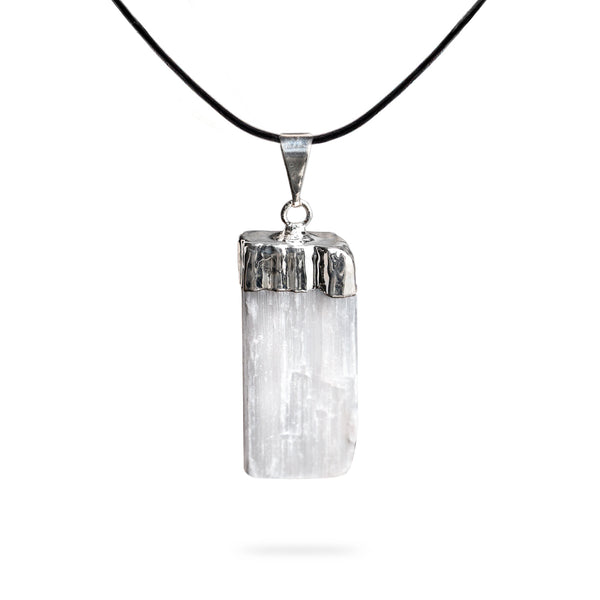
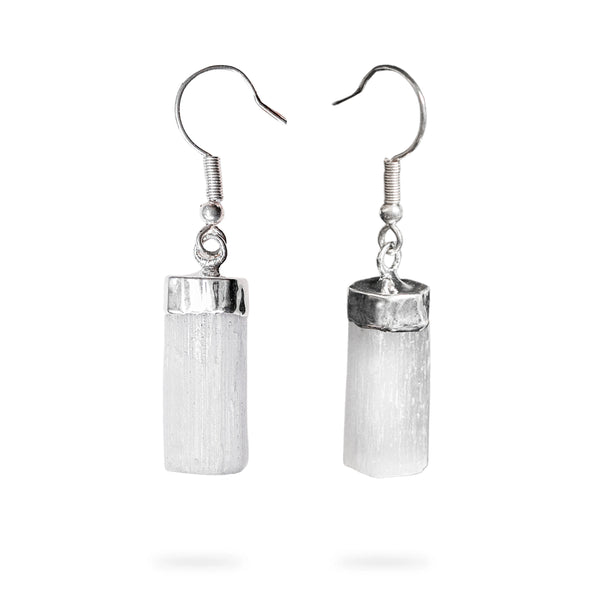
Selenite Lunar gypsum • Crown Chakra • Cleansing, angelic, amplifying of spiritual connection |
|
Why they clash: Both are high-vibration stones. Used together, they create what many practitioners describe as "being launched" a sensation of being pulled so far out of the body and the present moment that grounding becomes extremely difficult. People who are already empathic, ungrounded, or going through intense life transitions report feeling unmoored, anxious, and spacey when combining these two. |
|
|
Worst context: During sleep, periods of anxiety, grief, or any time you need to be functional in the physical world. |
Compromise: If you work with moldavite at all, always pair it with heavy grounding stones, obsidian, hematite, smoky quartz not additional high-vibration stones. Keep selenite for cleansing purposes, separate from moldavite work. |
|
Tiger Eye Solar Plexus • Earth + Fire • Willpower, confidence, action-oriented |
Lapis Lazuli Third Eye • Air + Water • Wisdom, deep truth, reflection, inner knowing |
|
Why they clash: Tiger eye pushes you toward decisive outer action it's yang, forward-moving, earthly. Lapis lazuli pulls you inward toward contemplation and higher truth; it's yin, reflective, and expansive. Worn together during active goal-pursuit, many people report feeling unclear about whether to trust their gut instinct (tiger eye) or their inner wisdom (lapis) , two things that should align, but these stones tend to make us feel contradictory. |
|
|
Worst context: Job interviews, sales calls, competitive situations, or any moment requiring confident self-assurance. Lapis softens the edges when the tiger eye's edge is exactly what you need. |
Compromise: They work beautifully in a meditation practice where the goal IS integration of outer will and inner wisdom. The problem is wearing them daily save this pairing for intentional inner-work sessions. |
|
Citrine Solar Plexus + Sacral • Solar energy • Abundance, optimism, high-energy manifestation |
Amethyst Crown + Third Eye • Lunar energy • Calm, spiritual depth, rest, intuition |
|
Why they clash: This is the classic sun-versus-moon clash. Citrine is daytime energy bright, active, outward-moving. Amethyst is nighttime energy, quiet, inward, spiritually receptive. Many people wear both because they love both, and report a mild but persistent sense of energetic conflict not dramatic, but a low-grade restlessness or inability to fully commit to either an energized or a peaceful state. |
|
|
Worst context: Sleep and rest routines citrine actively undermines the restful quality amethyst provides. Equally problematic in high-focus work sessions where amethyst's dreamy quality dulls the clarity citrine is trying to provide. |
Compromise: They are actually complementary when used at the right times of day. Citrine in the morning and working hours. Amethyst in the evening and for sleep. Some practitioners call this the "sunrise-sunset pairing" , beautiful in rotation, conflicted in combination. |
|
Sunstone Solar • Sacral + Solar Plexus • Independence, vitality, personal power, extroversion |
Moonstone Lunar • Sacral + Crown • Emotional intuition, receptivity, cycles, inner life |
|
Why they clash: Like citrine and amethyst but more intense sunstone and moonstone represent diametrically opposite energetic poles. Solar and lunar forces that in small doses balance beautifully in theory, but in sustained wear create an internal push-pull between self-assertion and self-surrender, between outward confidence and inward vulnerability. Several crystal practitioners specifically warn new users away from this combination during emotionally unstable periods. |
|
|
Worst context: During emotionally volatile times, major life decisions, or periods of identity uncertainty. When you most need clarity of direction, this pairing muddies it. |
Compromise: Like the citrine-amethyst pairing, these work beautifully as a rotation rather than a combination. New moon: moonstone. Waxing and full moon: sunstone. The natural lunar calendar becomes your guide. |
|
Red Jasper Root Chakra • Earth • Grounding, endurance, physical stamina, stubborn stability |
Blue Lace Agate Throat Chakra • Air + Water • Gentle communication, softness, peace, flowing ease |
|
Why they clash: Red jasper is a slow-burn, deeply physical stone it roots, stabilizes, and sustains. Blue lace agate is airy and gentle; it flows, softens, and dissolves tension. The problem isn't that they conflict dramatically; it's that they create such different physical sensations simultaneously that many people feel strangely disconnected, simultaneously heavy-footed and floaty-headed, neither fully present nor fully free. |
|
|
Worst context: Creative work requiring both inspiration and execution, or any situation demanding you be simultaneously emotionally open and physically grounded. |
Compromise: These make a lovely pair in a static crystal grid where balance is the intention. On the body, choose one based on what you need most that day. |
Special Mention: The Moldavite Problem
Moldavite deserves its own conversation because it is, energetically speaking, in a category of its own. Many experienced crystal practitioners simply recommend against combining moldavite with any other stone except heavy grounding ones — not because it "clashes" in the traditional sense, but because it dominates.
Moldavite is so high-vibration and so transformative that pairing it with other intentional stones tends to erase their purpose. You won't get the gentle communication support of aquamarine alongside moldavite. You won't get the steady abundance frequency of citrine. Moldavite doesn't blend — it takes over.
If you're new to moldavite, treat it as a solo act. Give it its own sessions, its own intention, and always, always combine it with grounding stones — never with fellow high-vibration crystals like selenite, celestite, or phenacite.
How to tell if your crystals are clashing

Before you panic-audit your entire collection, here are the actual signs that a crystal combination isn't serving you:
-
Persistent low-grade agitation you can't explain is not dramatic, just a subtle wrongness that started around the same time you introduced a new stone.
-
Emotional whiplash swinging between states without obvious external cause. Wired one hour, flattened the next.
-
Feeling simultaneously overstimulated and ungrounded the hallmark of two competing energies pulling in different directions.
-
Difficulty sleeping after starting to sleep with a new crystal combination especially if any activating stones (carnelian, citrine, sunstone, moldavite) are involved.
-
Feeling curiously flat or unmotivated, sometimes clashing energies don't amplify each other, they cancel out, leaving you with less energy than you started with.
-
Your intentions feeling muddy or contradictory if you're asking for abundance and serenity simultaneously from stones whose energetic personalities conflict, you may be sending confused signals.
Your own experience matters here. Crystal work is personal. A pairing that feels beautiful for one person may feel chaotic for another.
Notice that none of these signs are dramatic. Crystal clashing is rarely a crisis it's usually just a quiet friction that erodes your experience over time. That's why so many people don't connect it to their crystals. The effects are subtle enough to blame on something else.
So which crystals do work well together?

Once you understand clashes, you get better at building supportive combinations. A few classic harmonious pairings include:
-
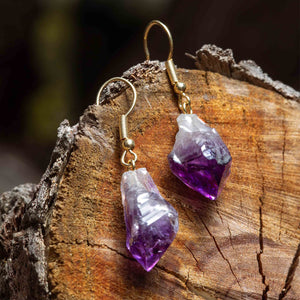
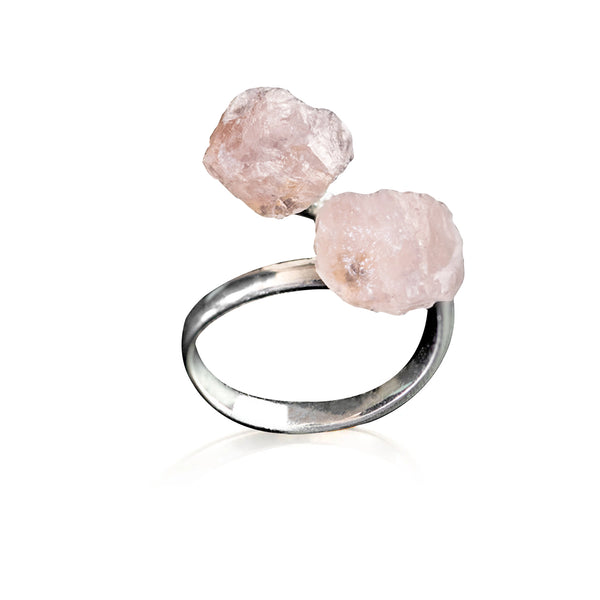
Rose Quartz + Amethyst for emotional peace and heart-centered calm
-
Citrine + Carnelian for confidence, creativity, and motivation
-
Black Tourmaline + Smoky Quartz for grounding and energetic protection
-
Moonstone + Selenite for intuition, softness, and spiritual reflection
-
Rose Quartz + Rhodonite complementary love energies
-
Black Tourmaline + Hematite double grounding without conflict.
-
Amethyst + Lepidolite the anxiety-dissolving duo
Crystal pairings for sleep

The bedroom is where most crystal compatibility problems reveal themselves first. A general rule that works for most people: keep only calming, low-vibration stones beside your bed. Amethyst, lepidolite, howlite, moonstone, blue lace agate, and selenite are your bedroom allies. Remove carnelian, citrine, tiger eye, moldavite, garnet, and red jasper to a different room at night. Your sleep quality will likely tell you everything you need to know about your evening combinations.
How to build a crystal combo that actually makes sense

If you want your stones to feel more harmonious, keep it simple.
Start with one intention. Not seven. One.
Ask yourself what you want support with right now. Calm? Protection? Confidence? Rest? Emotional healing? Focus?
Then choose one main crystal for that purpose and one or two supporting stones that naturally complement it.
That is usually enough. You do not need to carry your entire collection like an overprepared magical intern.
A better way to think about crystal compatibility

Instead of asking, “Can these crystals sit next to each other?” ask this:
Are these stones helping create the same energetic outcome?
That question changes everything. Because crystal compatibility is not about rigid rules or fear-based superstition. It is about energetic coherence. It is about understanding that each stone has a tone, and not every tone belongs in the same song.
Sometimes a clash is not a bad sign. It is just feedback.
Your crystals may be telling you that your setup needs more clarity, more simplicity, or a more honest intention. And frankly, that is useful advice whether you are arranging a crystal grid, decorating a nightstand, or running your entire life.
Trust Your Own Experience

Crystal compatibility lists including this one are starting points, not rulebooks. The most important piece of information about any crystal combination you're trying is how you actually feel while using it. Your nervous system knows before your brain catches up.
The people who get the most from crystals are not the people who memorize compatibility charts. They're the people who pay close attention to their own responses, who trust that subtle feeling of something being slightly off, and who aren't afraid to simplify when simplicity serves them better than accumulation.
Your crystal practice should feel like a coming home, not a complicated negotiation. If you're spending energy managing your stones rather than receiving from them, that's the first sign to pare back and start listening more carefully.
Which combination you reach for is less important than building the kind of awareness that lets you notice what each one does — solo, and in company.
— Ayana Crystals
Disclaimer

The world of crystals can be beautiful, intuitive, and deeply personal, but it gets much more effective when you stop throwing stones together based only on color or popularity.
Some crystals blend beautifully. Some compete. Some feel supportive in one context and completely wrong in another.
That does not mean you need to become overly strict about every pairing. It just means paying attention matters. If your crystals are tools for energy, mood, ritual, and intention, then compatibility is not a small detail. It is part of the practice.
So the next time a crystal combo feels off, trust that. Not every stone is meant to work with every other stone. And honestly, that is true of many things in life.
Even crystals have boundaries.
Frequently Asked Questions
1. Do crystals actually "clash" with each other — is this real?
In an energetic sense, there's no scientific evidence that they do. No peer-reviewed research has demonstrated that stones interact on a vibrational or spiritual frequency. But that's only half the answer. What folk traditions have been tracking often without naming it precisely is the real, felt experience of too much. A combination that feels wrong in your hands, that seems to scatter your attention rather than settle it, that registers somewhere in your body as discordant. That experience is real. It's just not produced by the minerals themselves, it's produced by your nervous system's response to the sensory environment you've created.
2. What does compatibility even mean in crystal terms?
The word gets used in at least three distinct ways, and it's worth knowing which one a source means. Energetic compatibility refers to the belief that certain stones have properties that work against each other, a "calming" stone undermining a "stimulating" one, or two stones said to want opposing things from the wearer. Elemental compatibility is a framework borrowed from Chinese five-element theory and Ayurvedic practice, where stones are assigned to fire, water, wood, metal, or earth and combined accordingly. Sensory compatibility is the most practically useful category: whether a combination feels comfortable to hold, wear, or keep nearby considering texture, weight, visual busyness, and the cumulative load it places on your senses.
3. Are there any crystals I should genuinely avoid combining?
A few pairings have practical not just energetic reasons behind them. Selenite and malachite shouldn't be stored together in humid conditions: selenite dissolves in water and malachite releases copper compounds when wet, making the combination a genuine chemical concern. Beyond that, traditional lore repeatedly flags: clear quartz with black tourmaline (said to amplify opposing intentions), carnelian with aquamarine (fire-and-water framing), and tiger's eye with labradorite (cited as overstimulating for anxious people). These last three have no chemical basis; they're experiential traditions worth testing on yourself, not rules worth treating as fixed.
4. Why does this matter specifically for neurodivergent people?
Neurodivergent nervous systems process sensory input more intensely, more literally, or with less automatic filtering. ADHD autism: What registers for a neurotypical person as a pleasant, busy cluster of crystals on a windowsill can quietly drain cognitive resources for someone with sensory processing differences through visual noise, competing textures, or the cumulative weight of multiple objects. The "more is more" approach to crystal use can actively backfire. This matters because people often turn to crystals for regulation for grounding, for focus, for calm and a combination that overshoots their sensory threshold works directly against that goal. The dose matters more for neurodivergent people than folk traditions tend to acknowledge.
5. I'm drawn to a "clashing" combination. What should I do?
Use it. Folk compatibility rules were developed by people with different nervous systems, different cultural contexts, and different sensory thresholds from yours. They were never designed to be universal, and no authority gave them the weight they're sometimes treated as having. Your pull toward a combination is real data especially if you've spent years learning to read your own body's signals in a world that wasn't always built to accommodate them. The one thing worth tracking: notice what happens over time, not just in the first excited moment. Some combinations feel energising initially and depleting after prolonged exposure. Others feel strange at first and then quietly become essential.
6. Can wearing too many crystals at once be overwhelming?
Yes and this is one of the most underacknowledged aspects of crystal use for neurodivergent people. sensory load Multiple stones add to your sensory input in ways that accumulate across the day: the weight shifting in your pocket, the visual complexity of a loaded desk, different textures competing for your hands' attention. If you're already approaching your sensory threshold by mid-afternoon which is common for people who mask, navigate overstimulating environments, or carry significant executive function demands, adding several crystals to your day can tip you into overload rather than ground you. The goal isn't a full collection working simultaneously. It's one stone, or a small curated combination, that your body stops consciously registering because it's simply become part of how your day feels.
7. Are these compatibility rules universal, or do they vary?
They vary enormously and they frequently contradict each other. Western new-age traditions draw heavily on colour symbolism and chakra frameworks developed in the 20th century. Ayurvedic gemstone therapy assigns stones based on planetary influence and constitutional type. Chinese feng shui works within a five-element system where stone placement, not pairing, is the primary concern. Indigenous crystal traditions vary by culture and are often not intended for outside appropriation or universal application at all. A combination considered harmful in one system is actively recommended in another. This inconsistency isn't a problem to be resolved, it's an invitation to treat all compatibility frameworks as input rather than instruction.
8. What does it feel like when a crystal combination isn't working for me?
The signals are usually quieter than people expect, not a dramatic reaction, just a low-grade drift in the wrong direction. Common signs a combination may not be serving you: increased mental noise or difficulty settling into focus after introducing it; a vague restlessness or irritability you can't attribute to anything obvious; physical tension particularly in the hands, jaw, or shoulders that you only notice once you've put the stones down; or a general sense of things feeling slightly "off" that lifts when you step away from your desk or change what you're carrying. None of these are mystical signals. They're your nervous system communicating through the channels it has available.
9. Is there science behind any of this?
Not for the crystals themselves but yes for the sensory experience they create. Evidence-based Research on sensory processing offers several relevant mechanisms. Smooth textures are associated with lower physiological arousal than rough or irregular surfaces. Weight has measurable calming effects on the nervous system the same principle behind weighted blankets, which have a growing evidence base for anxiety and sensory regulation. Colour affects mood and attention, with cooler tones generally associated with calm and warmer tones with alertness. The act of handling a familiar object activates a well-documented grounding response. None of this validates claims about crystal energy, vibration, or healing. What it does support is the more modest and more useful claim that the sensory properties of a stone or combination can genuinely affect how you feel.
10. How do I build a crystal "set" that works for my specific needs?
Start with one question: what does my nervous system need more of right now? Grounding? Focus? Quiet stimulation? Emotional steadiness? Choose a single stone whose sensory qualities point in that direction consider its weight, temperature, texture, and whether its visual quality feels calming or activating to you. Live with it for a full week before adding anything else. When you're ready to build a combination, add one stone at a time and give each addition several days before evaluating. For a desk set: think about texture contrast as a feature: a smooth sphere alongside a rough raw piece gives your hands variety without overwhelming your visual field. For carrying: prioritise what feels good in your pocket without demanding attention. Nothing that rattles, snags, or reminds you it's there at the wrong moment.